
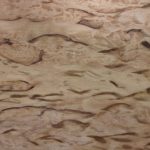

Caprail wood is one of the most exposed parts of a boat. Sun, salt, wind, and humidity act on the surface every day, testing materials and finishes. Over time signs of wear appear, small losses, and a reduction in definition in decorative details. Working on these areas requires skill, sensitivity, and deep knowledge of the material.
Restoring caprail wood is not a standard job. It is a craft process that starts with observation and develops through precise steps, aimed at bringing the wood back to its original beauty without altering its character.
The work always begins with complete sanding. The whole surface is sanded with 320, then 400, and 800 grit. This cleans the wood and creates an even base for the next steps. When the base is ready, two coats of clear finish are applied by brush. After drying, everything is checked carefully and any bubbles or marks are removed, sanding again with 400 and 800 grit. Then three more coats of clear finish are applied. When the finish is stable, the surface is refined again with finer grits: 800, 1000, 1500, and 2000. This makes the surface smooth and ready for polishing.
Polishing gives depth and uniformity to the wood, without pushing the gloss too far. The final step is vertical silicone sealing in the joints, done by hand with precision to seal well without leaving marks.
It is a step-by-step job, done without rush. Each phase needs its own time, and for this reason the result stays natural and lasts for years.
Yachts and Visual Continuity: The Value of Craft Restoration
One of the key aspects of yacht refitting is visual continuity. The caprail is not an isolated element, but part of the boat’s overall line. A well-done job must work in harmony with the rest of the structure, without visual breaks or inconsistencies.
Craft restoration helps keep this harmony. Surfaces regain definition, details recover depth, and the wood returns to a cared-for look without losing its original character.
The result is not “new” wood in an artificial sense, but renewed wood, consistent with its function and with the identity of the boat.
A precise, careful intervention improves not only the appearance, but also the overall perception of the vessel. Every detail shows a conscious choice focused on quality and durability.